 Feature · Screenplay
The Final Verdict




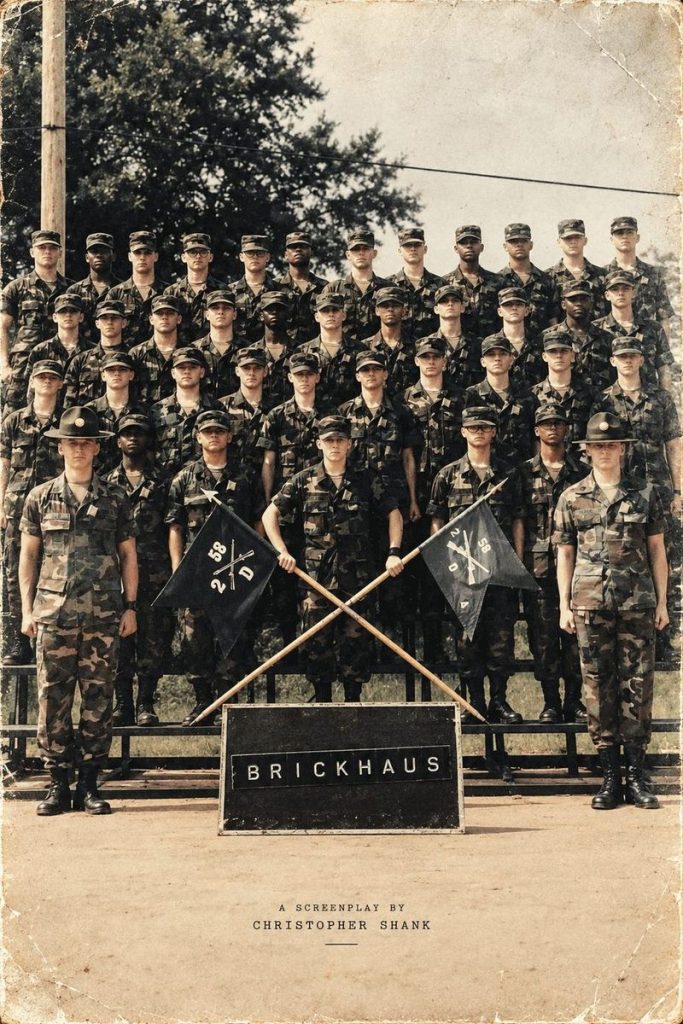
After a former infantryman dies by suicide, the men who served alongside him reunite at his rural cabin to settle his affairs—only to discover that the brotherhood they have spent years celebrating may be the only thing capable of preventing another tragedy.
Written by Christopher Shank
They survived the Army. Surviving each other might prove more difficult.
When a former infantryman named Brick dies by suicide, the men who served alongside him gather at his isolated rural cabin to clear out his belongings and put his affairs in order.
They arrive carrying decades of shared history: deployments, friendships, rivalries, resentments, and the particular brand of brutal humor that comes from knowing someone at their best and worst.
At first, the reunion resembles any other gathering of old soldiers. They drink, insult one another, revisit old arguments, and find increasingly creative ways to avoid discussing the reason they’re there.
But Brick has left behind more than possessions.
As the men discover recordings, notes, and evidence of a private life they never fully understood, their confidence in their own brotherhood begins to unravel.
They believed they knew him. They believed they would have recognized the warning signs. They believed that, whatever happened, they would always be there for one another.
Then another member of their group begins to come apart.
The weekend changes from a memorial into a desperate attempt to prevent another loss.
Brickhaus examines veteran suicide, isolation, masculinity, friendship, and the enormous difficulty some men face in admitting they need help.
But it is not a relentlessly grim film.
Its characters are profane, stubborn, affectionate, infuriating, and frequently hilarious. The humor comes from their relationships and the absurdities of knowing someone for decades—not from dismissing the seriousness of what they’re experiencing.
The film asks a difficult question: What does brotherhood actually mean when the uniforms are gone, the reunions become less frequent, and the people who once trusted each other with their lives can no longer find the words to ask for help?
If you or someone you know is struggling: U.S. — Veterans Crisis Line, dial 988 then press 1. Canada — call or text 988.
In 2006, my younger brother, U.S. Army Corporal Jeremy Shank, was killed during the second week of his deployment to Iraq.
The men in his squad had to finish the rest of that deployment without him.
I've thought about those men a great deal over the years. They shared experiences with my brother that I never could, and they went on living through the remainder of a war that he didn't come home from.
Nearly twenty years have passed.
In that time, I've watched my own friendships change. People who were once inseparable drift apart. Lives take different directions. Relationships that once seemed permanent become memories, sometimes without anyone doing anything particularly wrong.
And I've often wondered about the men who served alongside Jeremy.
Who did they become? Did they stay close? Do they still talk? What happens to a friendship forged under extraordinary circumstances when the people involved spend the next twenty years living very ordinary, very different lives?
What happens when the person who connected them is no longer there?
Those questions became the foundation of Brickhaus.
The film is fictional. It isn't intended to portray the actual men in Jeremy's squad or claim to know what their lives have been like. Instead, it imagines a group of former soldiers brought back together after decades apart, forced to confront the distance between who they were, who they've become, and who they believed their friends would always be.
Veteran suicide is central to the story, but so are friendship, aging, memory, masculinity, and the complicated ways people express affection and concern when they've never been particularly good at saying what they feel.
There's humor in it, too. A lot of it. Because I don't believe these men would spend an entire weekend solemnly discussing their feelings. I imagine they'd give each other absolute hell. They'd tell the same stories they've told a hundred times. They'd argue about things that stopped mattering years ago.
And somewhere underneath all of that, they'd be trying to figure out whether the brotherhood they remember still exists.
Brickhaus is ultimately about what we owe the people who once knew us better than anyone—and whether it's possible to find our way back to one another before another twenty years disappear.
Military service creates relationships that can endure for decades, but shared history doesn't guarantee that people continue to understand one another.
Brickhaus is interested in what happens when those bonds are tested by age, loss, distance, and the emotional habits people carry into civilian life.
It's also about the difference between remembering someone fondly and recognizing what they were going through while they were alive.
The story approaches those questions through ensemble drama and dark humor, while treating suicide and its consequences seriously.
About the writer
Christopher Shank is an Atlanta-based screenwriter and writer-director who grew up in southeast Missouri.
His younger brother, U.S. Army Corporal Jeremy Shank, was killed in Iraq in 2006.
Although Christopher is not a military veteran, the experience of losing his brother—and his subsequent work as a Survivor Care Advocate with the Tragedy Assistance Program for Survivors (TAPS)—has profoundly influenced his understanding of military families, grief, and the lasting consequences of service.
He holds an MFA in screenwriting and has developed a body of feature screenplays spanning family drama, military storytelling, comedy, horror, and science fiction.
His screenplays have received recognition from the Atlanta Film Festival, Richmond International Film Festival, Austin Film Festival, Nashville Film Festival, and other competitions and programs.
Across genres, his work frequently examines loss, family relationships, moral responsibility, and the stories people tell themselves to survive difficult experiences.
Contact Christopher › Website Professional inquiries All projects by Christopher Shank ›
Brickhaus is a developed feature screenplay available for discussion with independent producers, production partners, and filmmakers interested in veteran-centered storytelling.
Producers, financiers, supporters, distributors and talent can contact Christopher Shank here. Your message goes to the creator, with a copy to The Veterans Channel. The full screenplay is shared on request under NDA.